Living in Clearwater, Florida, means embracing the Sunshine State’s beauty—but also battling its infamous humidity. With average humidity levels often exceeding 70%, your home faces constant threats from moisture buildup, mold growth, and structural wear. As the team at Clearwater Handyman, we’ve seen firsthand how unchecked humidity can turn a cozy beachside retreat into a costly repair nightmare. Whether you’re in Clearwater or nearby areas like Seminole, this guide equips you with practical strategies to keep your home dry, durable, and delightful. Let’s dive in and safeguard your investment against Florida’s steamy climate.
Understanding Humidity’s Impact on Your Home
Florida’s humid subtropical climate doesn’t just make you sweat—it accelerates deterioration in your home’s materials. High moisture levels promote mold and mildew, corrode metals, and weaken wood and drywall. In Clearwater, where coastal breezes mix with inland heat, homes near the Gulf are especially vulnerable.
Why Humidity Hits Hard in Clearwater
Clearwater’s proximity to the Gulf of Mexico amplifies humidity, often pushing indoor levels above 60% without proper ventilation. This creates ideal conditions for allergens and pests, impacting your family’s health. According to local building experts, untreated humidity can reduce a home’s lifespan by up to 20 years. Don’t let it happen to yours—proactive maintenance is key.
Essential HVAC and Ventilation Strategies
Your heating, ventilation, and air conditioning (HVAC) system is your first line of defense against humidity. A well-maintained unit can dehumidify indoor air, keeping levels between 30-50% for optimal comfort.
Regular AC Maintenance Tips
- Change Filters Monthly: Clogged filters restrict airflow, forcing your AC to work harder and allowing moisture to linger. Opt for high-efficiency filters to trap more humidity.
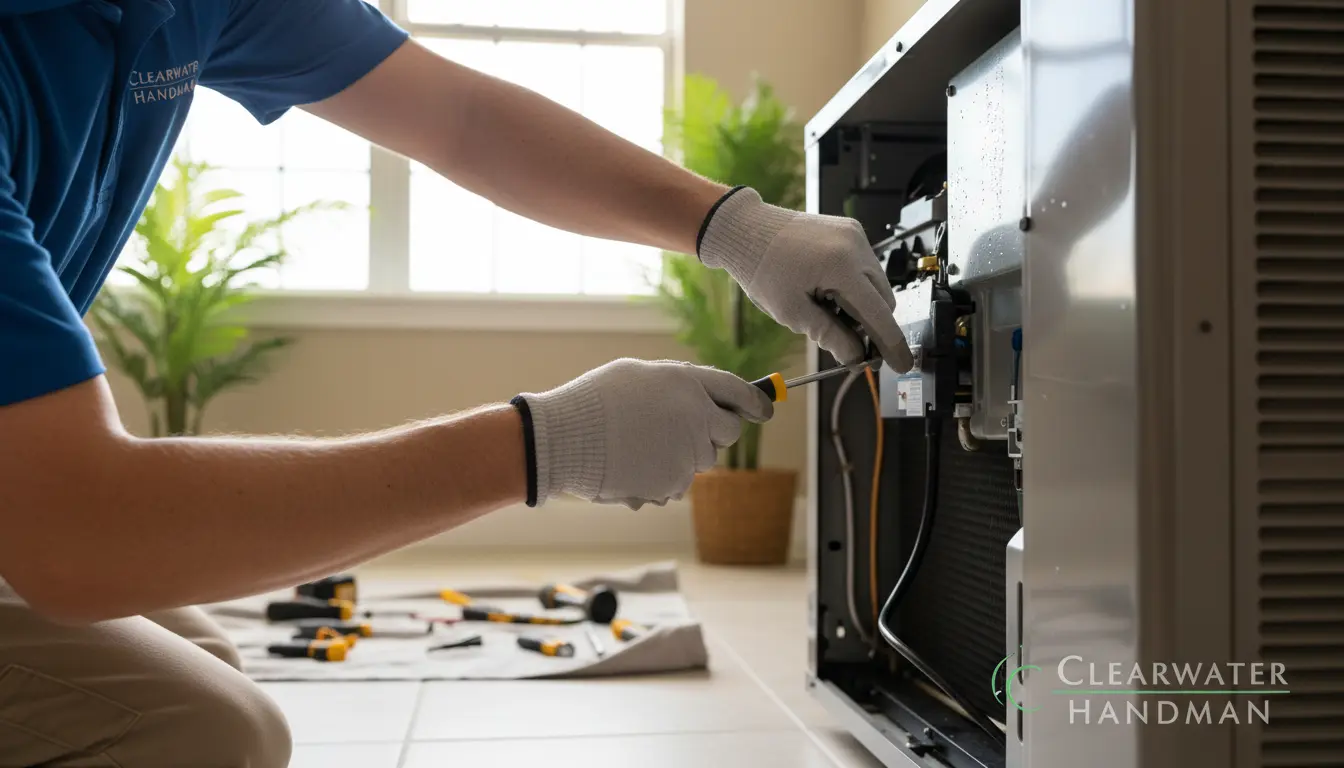
- Schedule Professional Tune-Ups: Twice a year, have a technician inspect coils, drains, and refrigerant. In Clearwater’s humid summers, this prevents breakdowns and ensures efficient dehumidification.
- Install a Dehumidifier: For extra protection in basements or attics, whole-home dehumidifiers integrate seamlessly with your HVAC.
If your system shows signs of strain, like uneven cooling, reach out to Clearwater Handyman for reliable minor carpentry repairs that often tie into HVAC access points.
Improving Indoor Airflow
Poor ventilation traps moisture, so focus on exhaust fans in bathrooms and kitchens. Run them during showers or cooking to expel humid air. In Clearwater homes, adding ceiling fans can circulate air without spiking energy bills—aim for models with reversible settings for year-round use.
Protecting Exterior Surfaces from Moisture
Florida’s humidity doesn’t stop at your doorstep; it seeps into siding, roofs, and foundations. Regular exterior care prevents water intrusion and extends your home’s curb appeal.
Roof and Gutter Maintenance
Gutters overflowing with debris direct water toward your foundation, exacerbating humidity issues. Clean them biannually, especially after Clearwater’s frequent storms. For professional results, consider our gutter cleaning services tailored to local weather patterns.
Inspect your roof for missing shingles or algae growth—common in humid climates. Seal cracks promptly to avoid leaks that invite mold indoors.
Siding and Painting Best Practices
Humidity warps vinyl siding and peels paint faster here. Choose moisture-resistant materials like fiber cement siding for replacements. When repainting, use mildew-resistant exterior paint and apply a primer to seal porous surfaces. In coastal Clearwater, this shields against salt-laden air too.
For homes showing wear, exterior pressure washing removes buildup without damaging surfaces, restoring your home’s fresh look.
Combating Mold and Mildew Indoors
Mold thrives in Florida’s warmth and dampness, often hiding in walls, ceilings, and HVAC ducts. Early detection saves health and wallet.
Prevention Techniques
- Monitor Humidity Levels: Use a hygrometer in key rooms; if over 60%, activate dehumidifiers or AC.
- Fix Leaks Immediately: Dripping faucets or roof leaks add moisture—address them to starve mold.
- Use Mold-Resistant Products: When renovating, select paints and caulks with antimicrobial properties.
In areas like Palm Harbor, where humidity spikes during rainy seasons, we recommend annual mold inspections. Clearwater Handyman can handle remediation alongside other tasks.
Cleaning and Remediation Steps
If mold appears, don’t scrub it yourself—spores spread easily. Ventilate the area, dry it thoroughly, and use EPA-approved cleaners. For extensive growth, professional removal is essential to prevent recurrence.
Wood and Structural Integrity in Humid Conditions
Wood swells and rots in high humidity, affecting doors, windows, and framing. Clearwater’s older homes, built pre-2000, are particularly at risk.
Door and Window Care
Swollen doors stick due to moisture absorption. Sand and reseal wooden frames annually. For hardware issues from corrosion, our door knob installation service ensures smooth operation with rust-resistant materials.
Windows need weatherstripping checks; replace deteriorated seals to block humid air infiltration.
Foundation and Fence Protection
Ground moisture can crack foundations—ensure proper grading slopes water away. For outdoor structures, treat wooden fences with sealants. If posts loosen from damp soil, fence post replacement restores stability, vital in windy Clearwater.
Extending to nearby spots like Safety Harbor, these tips apply broadly across Pinellas County.
Landscaping and Drainage Solutions
Your yard influences indoor humidity. Poor drainage floods crawl spaces, inviting pests and mold.
Smart Landscaping Choices
Plant humidity-tolerant natives like saw palmettos to reduce watering needs. Mulch beds to retain soil moisture without pooling. Install French drains if your Clearwater property slopes poorly.
Gutter and Downspout Extensions
Direct runoff at least 5 feet from your foundation. In heavy rains common here, this prevents basement humidity spikes.
FAQ: Home Maintenance in Florida Humidity
1. How often should I check my home’s humidity levels in Clearwater?
Daily during peak summer, but invest in a smart hygrometer for alerts. Aim to keep it under 50% to avoid mold.
2. Can I prevent rust on outdoor fixtures without professional help?
Yes, apply rust-inhibiting sprays quarterly and choose galvanized metals. For complex installs, Clearwater Handyman pros handle it.
3. What’s the best way to ventilate a humid attic?
Install ridge vents and soffit vents for cross-breeze. Add a powered attic fan if natural airflow falls short.
4. How does Florida’s humidity affect my AC efficiency?
It forces the unit to run longer, hiking bills by 20-30%. Regular maintenance keeps it efficient.
5. Are there local incentives for humidity-proofing my home?
Check Pinellas County programs for energy-efficient upgrades like dehumidifiers—often with rebates.
Conclusion: Take Control of Your Clearwater Home Today
Florida’s humidity is relentless, but with these strategies—from HVAC tweaks to exterior safeguards—you can protect your Clearwater home and enjoy worry-free living. At Clearwater Handyman, we’re passionate about helping locals in Clearwater and beyond, like Tarpon Springs, maintain resilient properties. Don’t wait for damage to strike—schedule a free consultation with our expert team today. Contact Clearwater Handyman now and let’s keep your home thriving in the humid tropics!